
War-Driven Cost Inflation Accelerates Paper Price Increases Across Grades

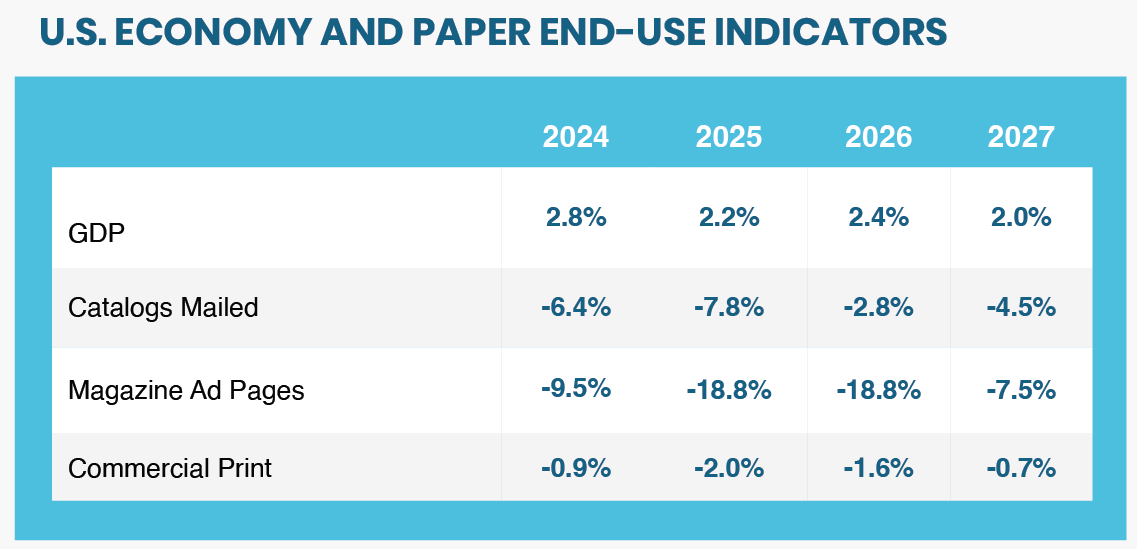
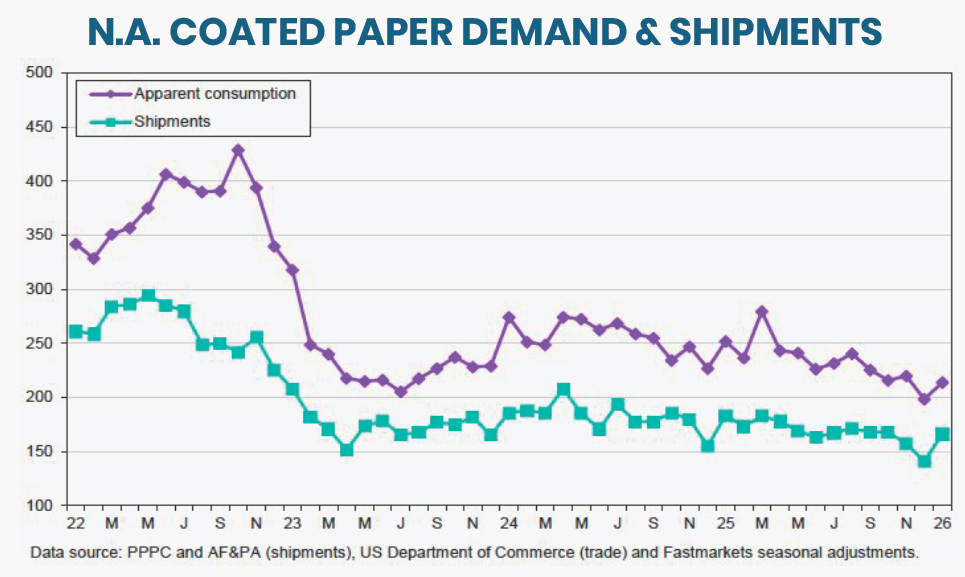
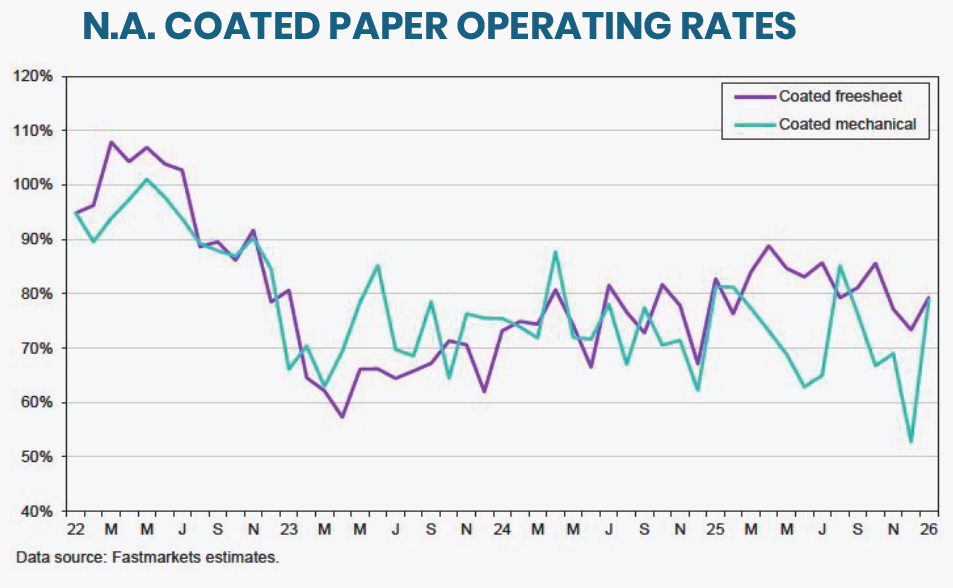
North American graphic paper markets are moving deeper into an inflation-driven pricing environment as the U.S.–Iran conflict continues to push up energy, freight, and logistics costs, prompting producers across grades to accelerate price increases. In uncoated freesheet, the March increase has held, and additional late-spring price actions announced by multiple producers signal growing momentum behind further cost pass-through efforts. Across coated and mechanical grades, rising oil-linked transportation and input costs are increasingly shaping pricing behavior, even as underlying demand remains weak.
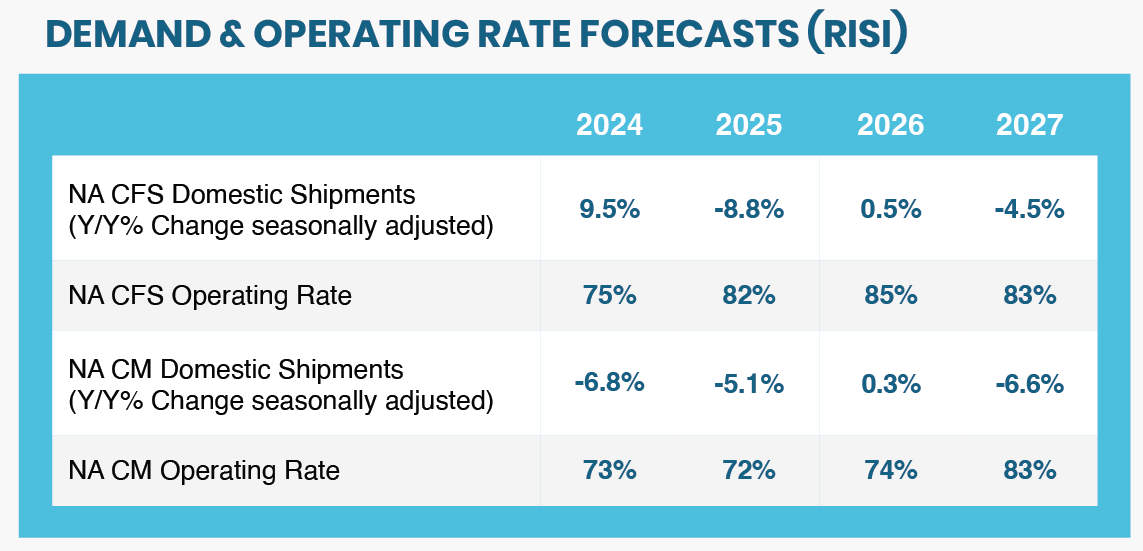
RISI/Fastmarkets now expects producers to pull forward price increases previously anticipated for 2027 into 2026, as mills seek to stay ahead of sustained cost inflation rather than rely on supply-demand tightening. In newsprint, tightening supply following ongoing mill closures continues to support aggressive pricing, with successive increases announced this spring despite accelerating demand erosion. Overall, pricing across graphic paper grades is expected to move higher in 2026, driven mainly by cost inflation and reduced import competitiveness.
Tariff Easing Keeps EU–U.S. Trade Talks on Track
The Trump administration has eased several contentious tariffs, reducing tensions in EU–U.S. trade talks and improving the prospects for final approval of a transatlantic trade deal agreed to last year. The adjustments include scaling back duties on certain steel-derived and pharmaceutical products, bringing them closer to the agreed 15% tariff ceiling on most EU exports to the U.S.
European lawmakers said the move lowers the immediate risk of escalation, though some tariffs – particularly related to steel derivatives – remain unresolved. The European Commission said it is assessing the changes while continuing to push for a more stable and predictable transatlantic trading environment.
For graphic paper buyers and suppliers, the takeaway is that while recent tariff easing improves near-term trade stability, the administration’s simultaneous move to potentially impose steep, sector-specific pharmaceutical tariffs underscores the need to actively monitor trade policy risk, maintain sourcing flexibility, and avoid assuming a fully de-escalated transatlantic trade environment.
European Commission Nears Phase I Ruling on UPM–Sappi Paper JV
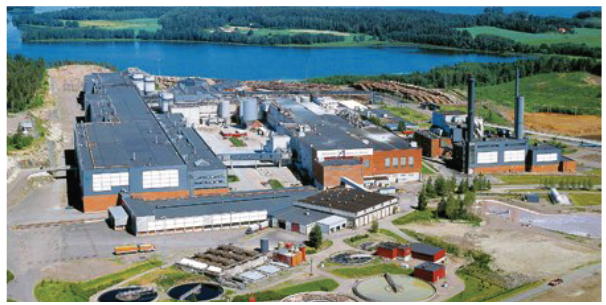
The European Commission is expected to complete its Phase I review of the proposed €1.42 billion graphic paper joint venture between UPM and Sappi by April 28. The transaction would combine UPM’s communication papers business in Europe and the U.S. with Sappi’s European graphic paper operations, encompassing eight UPM mills and four Sappi mills. Upon completion of the initial review, the Commission could approve the deal outright, approve it with conditions such as asset divestments, escalate the case to a Phase II investigation, or block it entirely.
Sappi has said the joint venture would reduce its exposure to the structurally declining graphic paper market and improve competitiveness, targeting synergies of more than €100 million. The company has acknowledged operational overlap but has not commented on potential mill closures. The new entity would operate independently, be equally owned by UPM and Sappi, and include a €613 million cash payment to UPM along with the transfer of €406 million in pension liabilities.
This content is sourced from Lindenmeyr Central’s April 2026 Paper Market Update.